How to tell winter wheat from winter barley in satellite imagery
14 October 2026
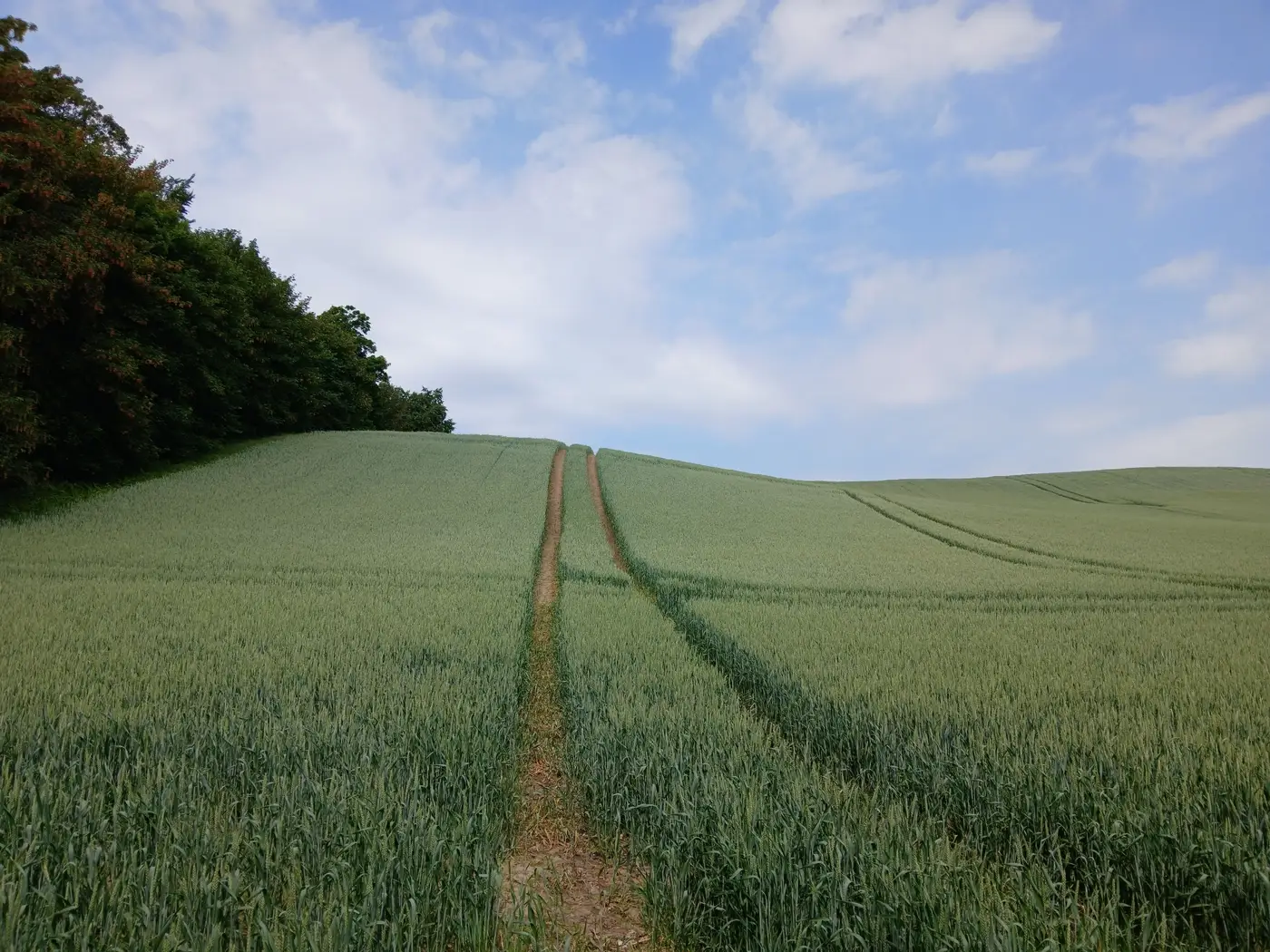
If you've ever pulled up two "wheat" parcels on a claim file and watched them green up and brown off on completely different schedules, you already know the problem: wheat and barley look almost identical from above for most of the growing season, right up until they don't.
Both are winter cereals. Both get drilled in the autumn, sit through dormancy, and put on a green canopy in spring that looks, on a single true-colour image, like grass. If you're trying to confirm a declared crop type off one pass of imagery, you're guessing. The tell comes from tracking timing across several passes of the season, not from any one frame.
Why one snapshot won't do it
Winter barley runs ahead of winter wheat on almost every stage that matters for a reflectance signal. It breaks dormancy a little earlier, stem-extends earlier, heads out earlier, and senesces earlier, often by two to three weeks depending on variety and region. Wheat holds its green canopy longer into early summer before the same drop-off happens.
That gap is small enough that a single image taken in, say, late April tells you almost nothing. Both crops can be sitting at peak greenness together. The gap only shows up when you track the same parcel across several passes and watch where each crop's curve peaks and where it turns.
Relying on canopy colour alone, or a crude visual read of "looks like cereal," gets you a cereal-family call at best. Separating barley from wheat is a phenology question: it turns on when each crop's curve peaks and drops, not what shade of green it shows on any one day.
Reading the season, not the scene
What actually separates the two on a seasonal reflectance curve:
- Green-up timing. Barley's spring greening starts and plateaus earlier. On a parcel where barley and wheat sit side by side, you'll see barley pull ahead on a vegetation index like NDVI by a week or two in early spring, even though both were drilled in the same autumn window.
- Peak and turn. Wheat tends to hold a higher, longer plateau before senescence. Barley's curve peaks, then drops off sooner, as the crop matures and dries down ahead of wheat.
- Senescence slope. The rate of drop-off after peak differs too; barley's decline tends to be sharper and earlier in the same local growing calendar.
- Harvest timing as confirmation, not proof. Barley is typically combined before wheat in the same region. A parcel that shows bare soil or stubble reflectance while neighbouring wheat parcels are still green is a strong secondary signal, but on its own it can also mean a late-drilled or stressed wheat crop, so it supports a call rather than making one by itself.
None of these show up on one date. They show up when you stack a handful of passes across the season and compare the shape of the curve, not the colour of the crop at any single moment. A parcel that greens up fast and turns early reads as barley. A parcel that holds its canopy a couple of weeks longer reads as wheat. Mixed signals, a slow green-up followed by an early turn, for instance, are usually the ones that need a second look rather than an automatic call.
What this means for a claim file
For a compliance officer working through declared-crop checks, the practical issue isn't whether the distinction exists. It's that confirming it by eye, parcel by parcel, across a season's worth of passes, isn't something you can do at scale without a lot of manual comparison work, and it still leaves you making a judgment call without a documented basis for it.
That's the gap a seasonal-curve approach closes: build the crop-type call from the full-season reflectance signature for each parcel, rather than from a single image, and attach a date and source to the call so it sits alongside the rest of the claim file instead of as a note in someone's head. Crop Type Mapping turns that curve into one crop-type call per declared parcel, delivered once a season as a layer you can drop next to the claim record.
If your desk is staring down a batch of declared cereal parcels this cycle, it's worth seeing what a dated, sourced crop-type call looks like before the next sample-plot walk gets scheduled.