Sunflower vs soybean: telling them apart from one satellite pass
16 November 2026
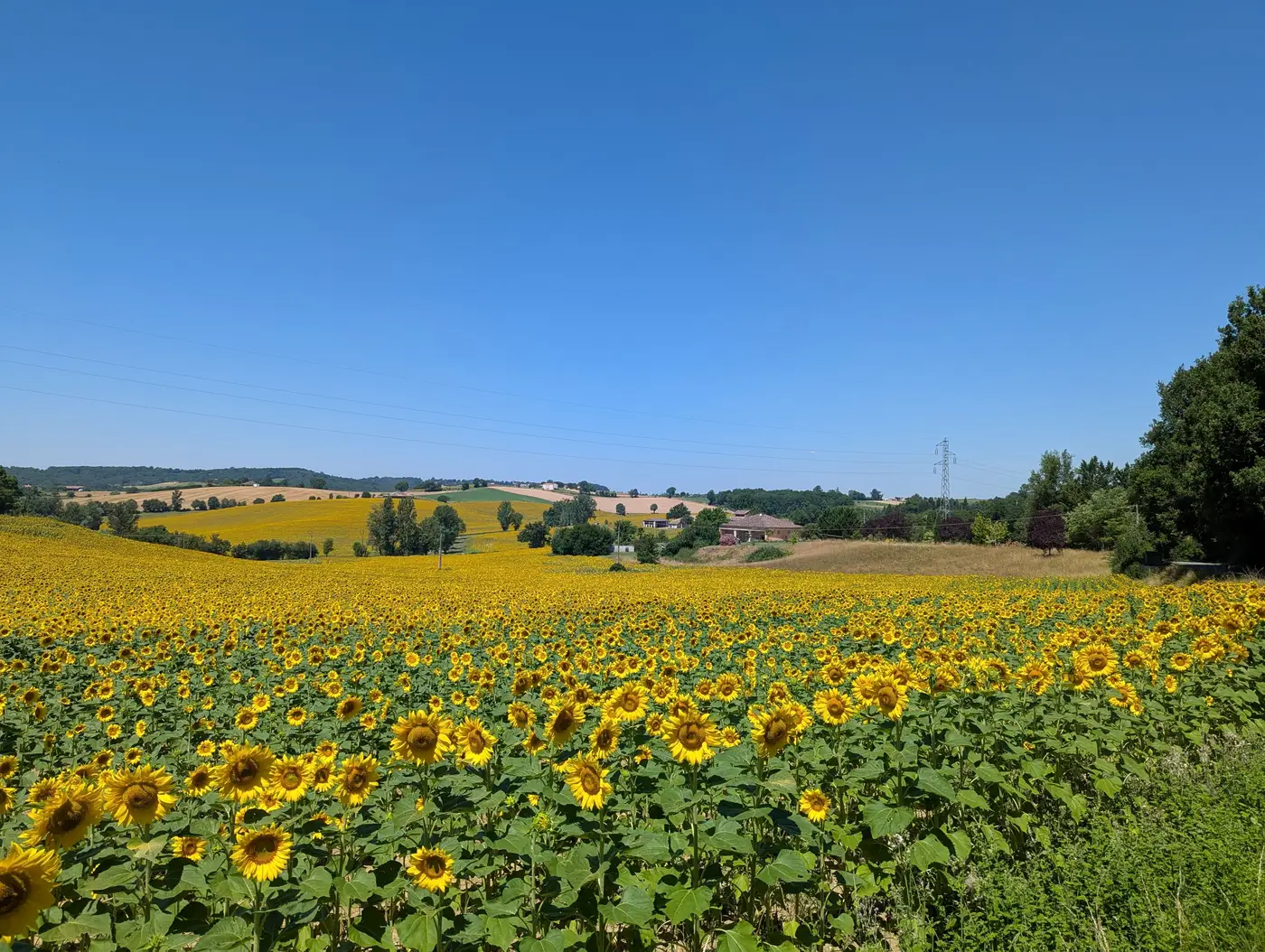
Both crops show up constantly on declared-area lists in the same regions, often on neighboring parcels, often drilled within a week of each other. Both are broadleaf. Both close canopy by early summer and both read as a solid green block of NDVI through most of the vegetative stage. If an inspector pulls one mid-season image and tries to make the crop-type call off that alone, sunflower and soybean can sit close enough in reflectance that the call comes down to a guess dressed up as a reading.
A single pass taken on an arbitrary date wasn't built to separate these two crops. What actually discriminates sunflower from soybean is the shape of how their curves move apart across the season.
Why the vegetative stage gives you nothing
From emergence through full canopy closure, sunflower and soybean track each other closely on a reflectance curve. Leaf area, chlorophyll content, canopy structure: all broadly similar, all producing a comparable near-infrared/red response. A paying agency checking a claim in late June or early July off one pass is working with a signature that genuinely doesn't discriminate. That's plant biology, not a gap in the imagery, and it's why a crop-type call anchored to a single inspection date deserves a second look.
Where the two signatures split
The divergence shows up at two points, and neither falls in the middle of the season:
Flowering. Sunflower's flower head changes the canopy's visible-band reflectance in a way soybean's small, hidden flowers never do. A sunflower field at peak bloom reads differently in the visible spectrum than the same field three weeks earlier or later. Soybean flowers are small and set under the leaf canopy; they barely move the signal at all. Catching a pass during the sunflower bloom window is one of the most reliable single checkpoints in the season.
Senescence. This is the bigger tell. Sunflower dries down fast and early, the head browns, the leaves drop, and NDVI falls off a cliff over a short stretch of weeks. Soybean's decline is slower and later, with the characteristic yellowing that spreads across the canopy before leaf drop. A field still holding green cover in mid-to-late season while a neighboring sunflower parcel has already crashed is telling you something a single mid-season pass never could.
The crop-type call for sunflower vs soybean comes down to shape: when the curve turns and how fast it falls, read across several dates rather than against a single threshold.
What this means for the parcel-level review
Treat mid-season crop identification as a single-date problem and you'll keep getting the same result: the crop that's hardest to separate in July is often obvious by September, once the senescence timing has played out. Any workflow that locks in a crop-type determination from one pass, especially one pulled to match an inspection calendar rather than the crop's own phenology, will misclassify a meaningful share of sunflower and soybean parcels sitting side by side.
A crop-type call built from the full seasonal trajectory catches the flowering bump and the senescence drop that a single date misses, tied to the parcel boundary already on file rather than reconstructed from scratch each time a claim gets flagged. Crop Type Mapping builds that call from the parcel's own reflectance signature across the season and delivers it as a dated, sourced layer that sits next to the claim file.
If sunflower-soybean confusion keeps showing up on your declared-area review, it might be worth seeing what that seasonal call looks like on your own parcels.