What is a crop calendar, and why paying agencies use it for cross-checks
19 October 2026
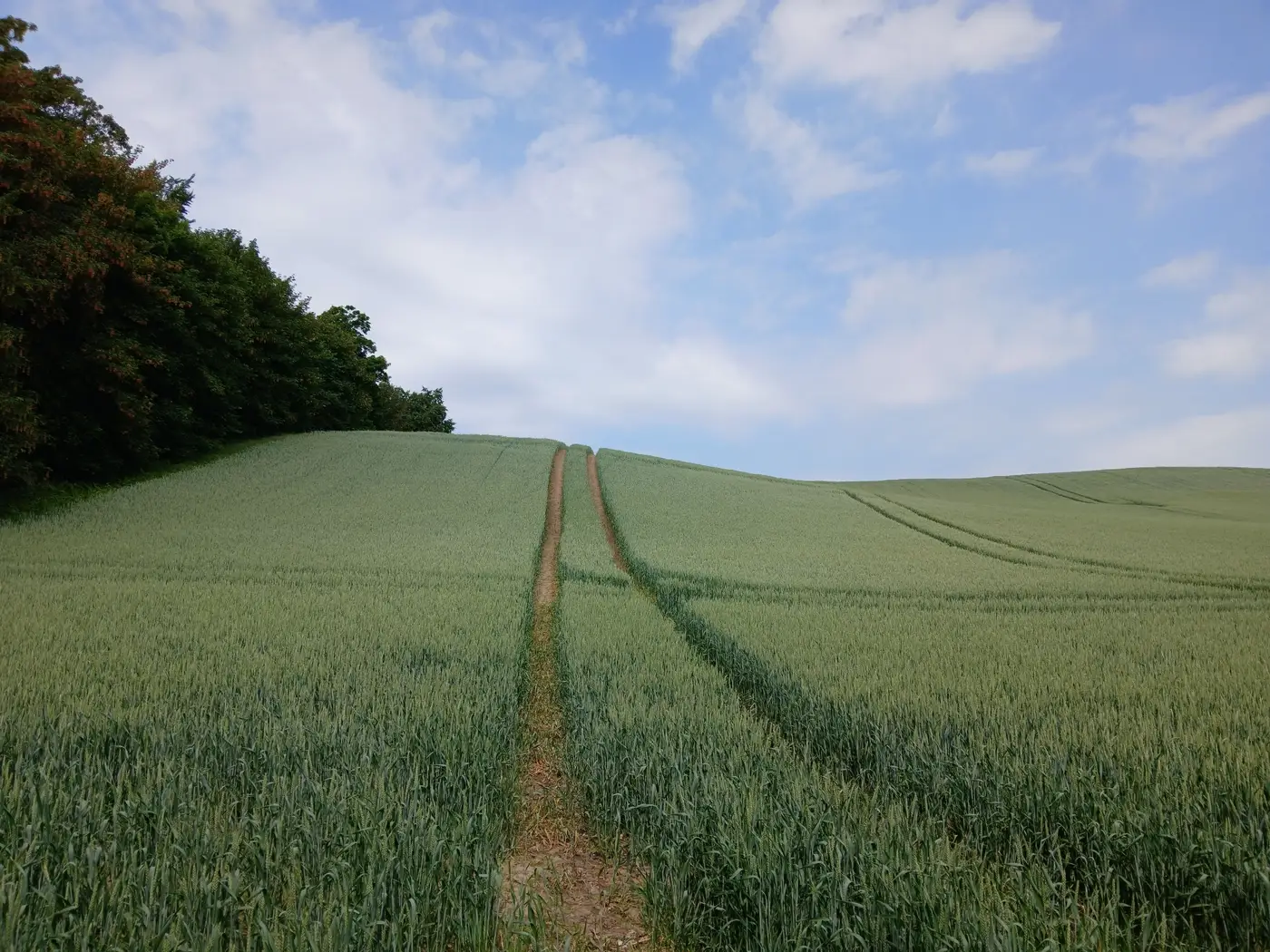
A crop calendar is the reference table that says, for a given region and crop, roughly when sowing happens, when the crop is at peak growth, and when it's typically off the field. Agronomy departments and national statistics offices publish these by NUTS region or by climate zone, usually as a date range rather than a single date, because a wet spring pushes maize sowing back two weeks one year and pulls it forward the next.
For a paying agency running the annual declared-crop check, the calendar is the reference you hold a satellite pass or a field photo up against. If a parcel is declared as winter wheat, the calendar tells you the field should show green cover by late autumn, a dormant winter signature, and senescence by early summer. If an inspector's photo from mid-July shows bare soil and stubble, that mismatch is worth a question, though it doesn't prove fraud on its own, and the calendar is what lets you say "worth a question" instead of guessing.
Where the calendar sits in the claim process
Most schemes under the IACS framework ask for the crop type on the declaration, a parcel boundary, and sometimes a sowing date. The calendar sits between those two things and whatever evidence you pull for cross-compliance: orthophoto, site visit note, or imagery pass. You're not checking yield or density at this stage, just whether what's on the ground is consistent with what was declared, at a time when that crop should look a certain way.
This matters most for crops that get swapped on paper but not relabeled in the field, double-cropping declarations where a second planting gets missed, and parcels declared as fallow or green cover that carry something commercial behind the label. In each case, the calendar gives you the expected window. The evidence gives you the actual state. The gap between the two is what goes in the file note.
Why a single snapshot isn't enough
A crop calendar cross-reference only works if your evidence lands inside, or close to, the right part of the window. A single orthophoto flight timed for a different purpose can catch a field at a stage where half a dozen crops look alike, bare soil, early tillering, whatever. That's the limitation every paying agency bumps into with one-off imagery: you get a date, but you don't get the shape of the season around it.
What actually distinguishes crop types is the reflectance pattern across the growing season, not one frame. A winter cereal and a spring-sown legume can look similar in a single March pass and completely different by June. That seasonal shape is what a parcel-level crop-type call is built from: wide-swath multispectral passes read across the season, scored against the parcel's own signature, and delivered as one dated, sourced call per parcel rather than a field-by-field guess from a single photo. If you've been stitching crop calendar logic together by hand from scattered imagery, Crop Type Mapping turns that seasonal signature into a parcel-level layer you can drop straight into the claim file.
A few things worth knowing before you build a cross-check into SOP
The calendar is regional, not national. A date range published for one NUTS region doesn't transfer cleanly to a neighboring one with different soil or elevation. Pull the calendar for the specific zone the parcel sits in, not the national average.
Weather shifts the window every year. Treat the published dates as a guide, not a fixed rule, and widen the window in years with a notably late or early spring.
A mismatch isn't proof. A field that doesn't match its expected calendar stage flags a parcel for a closer look. It doesn't close the file on its own, it just tells you where to spend the inspection time you have.
Document the window you checked against. When a crop-type mismatch goes into an appeal, the first question back is usually "what window did you compare it to." Having that logged alongside the evidence saves a round trip.
A crop calendar tells you what a parcel should look like at a given point in the season. Pairing that with a dated, parcel-level crop-type call gets you a cross-check you can defend on appeal, rather than one built on a single photo and a guess.